 Have you been diagnosed with pre-diabetes and want to prevent progression? Read more to learn what steps you can take to put your health on track.
It often starts quietly. You feel mostly fine—maybe a little more tired than usual or noticing small changes in weight or energy. Then, during a routine checkup, your lab results come back showing “elevated blood sugar” or “pre-diabetes.”
It’s easy to brush off. After all, it’s not diabetes yet, right?
But pre-diabetes is more than just a warning sign—it’s a critical opportunity. The good news is that with the right steps, pre-diabetes can be managed and often reversed before it turns into type 2 diabetes.
At Valley Obesity Medicine & Diabetes (VOMD), we specialize in helping patients understand and take charge of their metabolic health. Let’s explore what pre-diabetes means, how it differs from diabetes, and what you can do right now to change your trajectory.
What Is Pre-diabetes?
Pre-diabetes means your blood sugar levels are higher than normal, but not high enough for a diabetes diagnosis. It signals that your body is having trouble using insulin effectively—a condition known as insulin resistance.
Insulin is the hormone that helps move sugar (glucose) from your bloodstream into your cells for energy. When your body becomes resistant to insulin, glucose starts to build up in the blood. Over time, this can damage blood vessels, organs, and nerves, leading to type 2 diabetes if not addressed.
According to the CDC, more than 1 in 3 American adults has prediabetes, and most don’t even know it.
Pre-diabetes vs. Diabetes: What’s the Difference?
The main difference between pre-diabetes and diabetes is the degree of insulin resistance and blood sugar elevation.
| Condition | A1C (Average Blood Sugar) | Fasting Blood Glucose | What It Means |
|---|---|---|---|
| Normal | Below 5.7% | Below 100 mg/dL | Healthy insulin function |
| Pre-diabetes | 5.7–6.4% | 100–125 mg/dL | Early insulin resistance |
| Diabetes | 6.5% or higher | 126 mg/dL or higher | Ongoing high blood sugar and impaired insulin response |
If you’re in the pre-diabetes range, your body is already working harder than it should to maintain normal blood sugar. The earlier you act, the easier it is to bring things back into balance.
Common Signs of Pre-diabetes
Pre-diabetes doesn’t always cause noticeable symptoms, which is why it often goes undiagnosed. However, some people may experience:
- Increased thirst or frequent urination
- Fatigue or low energy
- Blurred vision
- Weight gain, especially around the midsection
- Skin darkening on the neck, armpits, or groin (a condition called acanthosis nigricans)
Even if you feel fine, risk factors like obesity, family history of diabetes, sedentary lifestyle, or high blood pressure are reasons to get screened regularly.
Why Acting Early Matters
The shift from pre-diabetes to type 2 diabetes isn’t sudden—it happens over time as insulin resistance worsens. But here’s the hopeful part: this progression isn’t inevitable.
With lifestyle and medical support, many people can reverse pre-diabetes and return to normal blood sugar levels. Early intervention also helps prevent the complications of diabetes—such as heart disease, nerve damage, and kidney problems—before they ever begin.
At VOMD, we often tell patients: “Pre-diabetes is a chance to rewrite your story—not the end of it.”
How to Prevent Pre-diabetes from Progressing
You don’t have to overhaul your entire life overnight. Small, consistent steps can make a powerful difference. Here’s where to start:
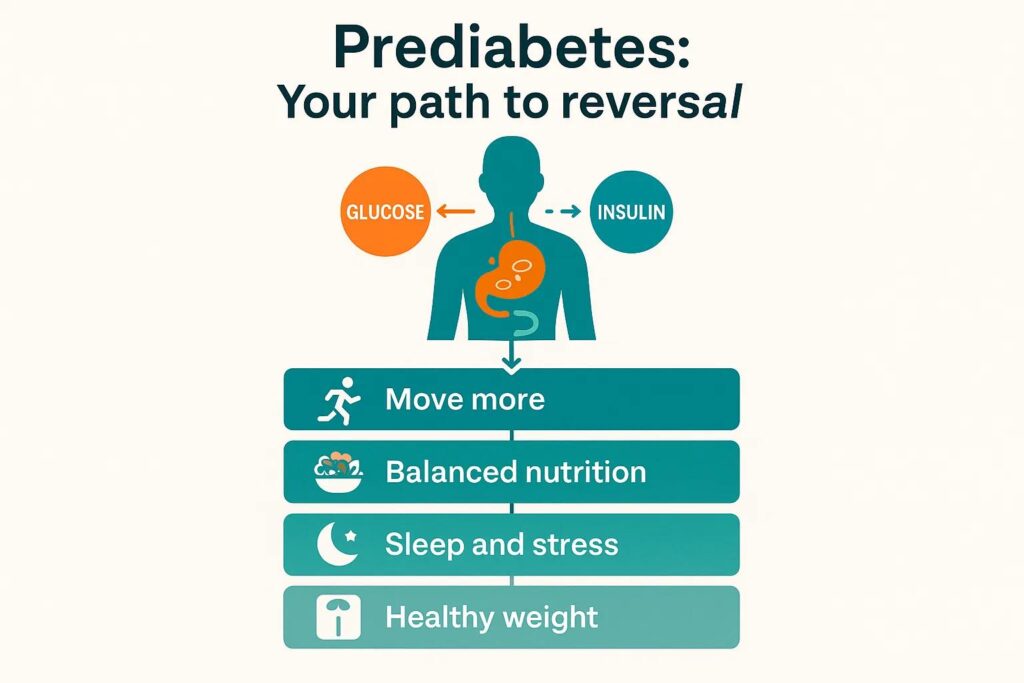
1. Move More—In Ways You Enjoy
Exercise helps your body use insulin more efficiently. Aim for at least 150 minutes of moderate activity per week, like brisk walking, swimming, or cycling.
You don’t need a gym membership or intense workouts to make progress—consistency matters more than perfection. Even short, 10-minute walks after meals can help lower blood sugar levels.
2. Focus on Balanced, Sustainable Nutrition
Forget crash diets or rigid rules. Instead, aim for meals that include lean proteins, healthy fats, high-fiber carbs, and plenty of vegetables.
At VOMD, we work with patients to create meal plans that are realistic and enjoyable—not restrictive. The goal is to stabilize blood sugar, not eliminate entire food groups.
3. Prioritize Sleep and Stress Management
Poor sleep and chronic stress can raise cortisol levels, which interfere with insulin sensitivity. Try to establish a consistent bedtime routine, reduce caffeine late in the day, and incorporate relaxation techniques such as deep breathing, stretching, or mindfulness.
4. Maintain a Healthy Weight
Even modest weight loss—5% to 10% of your body weight—can significantly improve insulin resistance and lower your risk of developing diabetes.
This doesn’t have to happen through drastic dieting. With medical guidance and evidence-based treatments, weight management can become more achievable and sustainable.
5. Get Regular Check-Ups
Monitoring your blood sugar, A1C, blood pressure, and cholesterol gives you a clear picture of your metabolic health. Regular follow-ups help your care team make timely adjustments to your plan.
A Medical Approach That Looks at the Whole Picture
At Valley Obesity Medicine & Diabetes, we go beyond “willpower” and quick fixes. Dr. Michael Li, a board-certified physician in Internal Medicine and Obesity Medicine, takes a comprehensive approach—looking at your full health picture, not just your blood sugar numbers.
Our care model combines medical evaluation, nutrition guidance, behavioral support, and if appropriate, FDA-approved medication to help you restore balance.
We recognize that obesity and diabetes are metabolic diseases—not moral failures. Managing them requires understanding your biology, not just your habits.
It’s Never Too Late to Take Control
Pre-diabetes doesn’t have to become diabetes. Every small change you make today—every healthy meal, walk, or good night’s sleep—helps your body work more efficiently and reduces your long-term risk.
You’re not alone in this journey. With the right medical guidance and support, your health story can change for the better—starting now.
Schedule a consultation to learn more about your metabolic health and how to prevent diabetes before it starts. Together, we’ll build a plan that fits your life and helps you feel your best.