
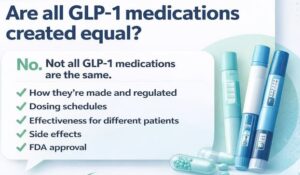
Are All GLP-1 Medications Created Equal?
The short answer is no.
GLP-1 medications have become an important tool in the treatment of obesity, diabetes, and metabolic disease. While these medications share a similar mechanism of action, they are not all the same—and those differences matter when it comes to safety, effectiveness, and long-term results.
What Are GLP-1 Medications?
GLP-1 (glucagon-like peptide-1) receptor agonists work by mimicking a naturally occurring hormone in the body that helps regulate blood sugar, slow gastric emptying, and increase feelings of fullness. These effects can support weight loss and improved metabolic health when used appropriately under medical supervision.
Key Differences Between GLP-1 Medications
Although they work in similar ways, GLP-1 medications differ in several important areas:
🔘 How they’re made and regulated
Some GLP-1s are FDA-approved and manufactured under strict pharmaceutical standards, while others are compounded and not held to the same regulatory oversight.
Some GLP-1s are FDA-approved and manufactured under strict pharmaceutical standards, while others are compounded and not held to the same regulatory oversight.
🔘 Dosing schedules
GLP-1 medications may be taken daily or weekly, and dosing titration varies by medication. These differences can affect convenience, adherence, and side-effect management.
GLP-1 medications may be taken daily or weekly, and dosing titration varies by medication. These differences can affect convenience, adherence, and side-effect management.
🔘 Effectiveness for different patients
Not every patient responds the same way. Some medications may lead to greater weight loss or better blood sugar control depending on an individual’s health history, genetics, and lifestyle.
Not every patient responds the same way. Some medications may lead to greater weight loss or better blood sugar control depending on an individual’s health history, genetics, and lifestyle.
🔘 Side effects and tolerability
While nausea, gastrointestinal symptoms, and appetite changes are common across the class, their severity and frequency can vary between medications and formulations.
While nausea, gastrointestinal symptoms, and appetite changes are common across the class, their severity and frequency can vary between medications and formulations.
🔘 FDA approval and clinical testing
FDA-approved GLP-1 medications have undergone extensive clinical trials to evaluate safety, dosing accuracy, and effectiveness. This level of testing provides important reassurance for both patients and clinicians.
FDA-approved GLP-1 medications have undergone extensive clinical trials to evaluate safety, dosing accuracy, and effectiveness. This level of testing provides important reassurance for both patients and clinicians.
What About Compounded GLP-1 Medications?
Compounded GLP-1 medications are not FDA-approved and are not subject to the same oversight, safety standards, or quality controls as FDA-approved drugs.
This can raise concerns about:
- Medication consistency
- Dosing accuracy
- Purity and potency
- Overall patient safety
While compounded medications may be marketed as more affordable or more accessible, it’s important to understand the tradeoffs and risks involved.
Do Prices Differ?
Yes. The cost of GLP-1 medications can vary significantly depending on:
- The specific medication
- Whether it is FDA-approved or compounded
- Insurance coverage
- Pharmacy pricing and availability
Price is an important consideration—but it should always be weighed alongside safety, effectiveness, and medical oversight, not in isolation.
Our Approach at VOMD
At Valley Obesity Medicine & Diabetes, we prioritize evidence-based, FDA-approved treatments and take time to work closely with each patient. Our goal is to select options that are safe, effective, and appropriate for your individual health needs, not one-size-fits-all solutions.
If you’re considering a GLP-1 medication or have questions about your current treatment, a personalized medical evaluation is essential. The right choice is the one that balances science, safety, and your long-term health goals.
Michael Li, MD