
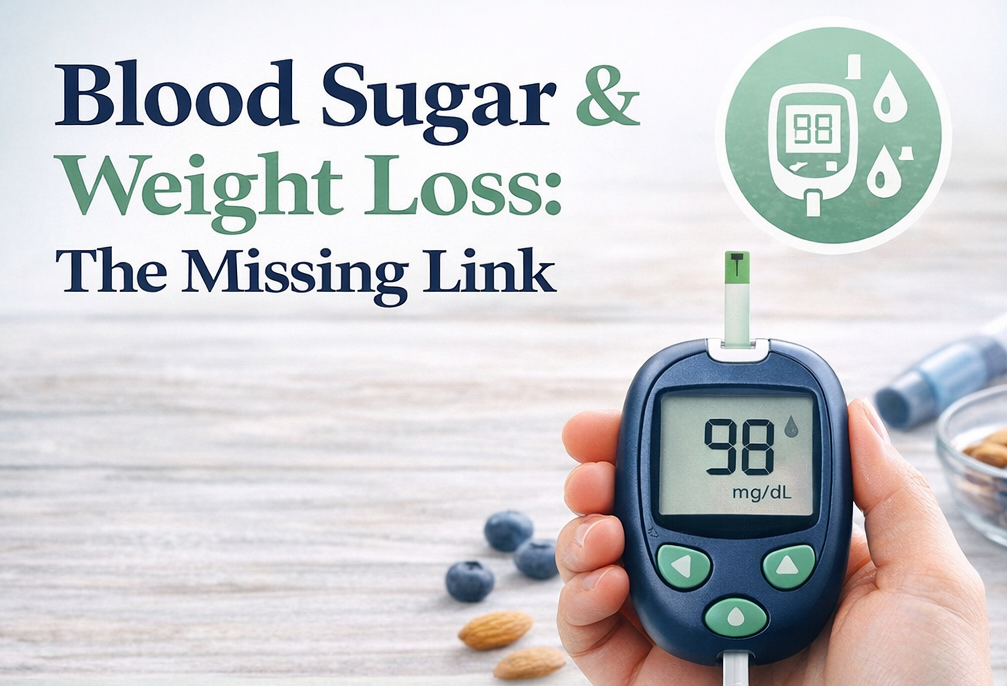
How Blood Sugar Affects Cravings and Fat Storage
If weight loss feels harder than it “should” be, you’re not alone. And you’re not failing.
Blood sugar balance plays a huge role in cravings, energy, and fat storage—and it’s often an overlooked piece of the puzzle.
Blood sugar balance plays a huge role in cravings, energy, and fat storage—and it’s often an overlooked piece of the puzzle.
Many people are doing “all the right things” and still feel stuck. Understanding how blood sugar works in the body can explain why weight loss feels so challenging—and what can be done about it.
What Is Blood Sugar, Really?
Blood sugar (glucose) is your body’s main source of energy. It comes primarily from the carbohydrates you eat and is regulated by insulin, a hormone that helps move glucose from your bloodstream into your cells.
When blood sugar stays relatively steady, your body has consistent energy, fewer cravings, and better metabolic function. When it swings up and down, things get harder—fast.
Blood Sugar Spikes Drive Cravings
When you eat foods that rapidly raise blood sugar (such as refined carbs or sugary foods), your body releases a surge of insulin to bring levels back down.
The problem?
Blood sugar often drops too low afterward.
Blood sugar often drops too low afterward.
This drop can trigger:
- Intense hunger
- Cravings for sugar or carbs
- Irritability or “hangry” feelings
- Fatigue or brain fog
Your body is simply trying to correct what feels like an energy emergency. Cravings in this situation are not about willpower—they’re a biological response.
Low Blood Sugar = Survival Mode
When blood sugar drops too low, your body shifts into protection mode. Stress hormones like cortisol rise, signaling your body to:
- Seek quick energy (usually sugar)
- Hold on to stored energy (fat)
- Slow down fat burning
In other words, unstable blood sugar can push your body into a state where weight loss becomes much harder.
How Blood Sugar Impacts Fat Storage
Insulin doesn’t just lower blood sugar—it also tells your body to store energy. When insulin levels are frequently high due to repeated blood sugar spikes, your body becomes more likely to store fat and less able to access it for fuel.
Over time, this can contribute to:
- Increased fat storage
- Difficulty losing weight despite calorie restriction
- Greater hunger between meals
This is one reason “eat less, move more” often falls short for many people.
Why You’re Not “Addicted to Food”
Many patients blame themselves for cravings or emotional eating. But when blood sugar is unstable, the drive to eat isn’t emotional—it’s physiological.
Your body is responding exactly as it was designed to respond.
Addressing blood sugar balance often leads to:
- Fewer cravings
- More stable energy
- Better appetite control
- Improved ability to lose fat
Supporting Healthier Blood Sugar Balance
Small, consistent changes can make a meaningful difference, such as:
- Eating protein and fiber with meals
- Avoiding long stretches without food
- Reducing ultra-processed carbohydrates
- Prioritizing sleep and stress management
For some people, additional medical support is needed to address insulin resistance or metabolic dysfunction—especially when lifestyle changes alone haven’t worked.
The Takeaway
If weight loss has felt like an uphill battle, blood sugar imbalance may be playing a larger role than you realize. This isn’t about trying harder—it’s about understanding how your body works and giving it the support it needs.
When blood sugar is more stable, cravings quiet down, energy improves, and weight loss becomes more achievable—not through force, but through balance.
Michael Li, MD