
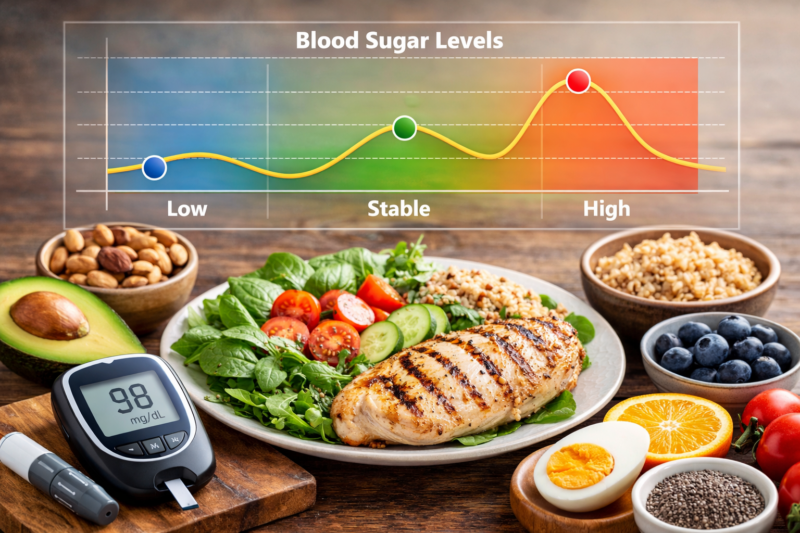
Weight loss isn’t always as simple as “eat less, move more.” Many people struggle to shed pounds despite following healthy diets and exercising regularly. One often-overlooked factor that can make or break weight loss success is blood sugar regulation.
Even people without diabetes can experience blood sugar fluctuations that hinder weight loss. Energy crashes, sugar cravings, and difficulty sticking to a diet are all common signs that blood sugar may be sabotaging your efforts.
- Your body burns stored fat more efficiently.
- Cravings for sugary or processed foods decrease.
- Energy levels remain steady throughout the day.
Conversely, uncontrolled blood sugar can make you feel hungry all the time, sabotage your workouts, and slow down your metabolism. This is why traditional weight loss programs sometimes fail—they address diet and exercise but ignore the hormonal impact of blood sugar.
- Eat balanced meals: Include lean proteins, healthy fats, and high-fiber carbohydrates at every meal to prevent spikes and crashes.
- Move regularly: Exercise improves insulin sensitivity, helping your body use glucose more efficiently.
- Manage stress: Chronic stress raises cortisol, which can increase blood sugar and promote fat storage.
- Get enough sleep: Sleep deprivation negatively affects insulin sensitivity and appetite-regulating hormones.
- Work with a healthcare professional: Testing blood sugar levels and developing a personalized plan can be a game-changer for weight loss.
At Valley Obesity Medicine & Diabetes, we focus on a medical approach to weight loss, taking into account hormones, metabolism, and blood sugar regulation. Our goal is to help patients lose weight safely and sustainably by addressing the underlying causes—not just the symptoms.