
Are you concerned that you are showing symptoms of diabetes? Continue reading to learn more about common signs of diabetes.
Diabetes often develops quietly. Many people live with high blood sugar for years before realizing something’s wrong. The symptoms can be subtle at first—easy to dismiss as stress, aging, or just being “a little off.” But catching diabetes early makes a world of difference.
At Valley Obesity Medicine & Diabetes (VOMD), we believe that knowledge is power. Understanding the early signs of diabetes can help you take charge of your health before complications develop. Whether you’re at risk or already managing metabolic changes, recognizing these signals is the first step toward prevention and control.
Understanding Diabetes: A Quick Overview
Before diving into symptoms, it’s important to understand what diabetes actually is.
Diabetes is a chronic condition that affects how your body turns food into energy. When you eat, your body breaks down most foods into glucose (sugar), which enters your bloodstream. Your pancreas releases insulin—a hormone that helps glucose move into your cells for fuel.
When you have diabetes, this system doesn’t work properly. Either your body doesn’t make enough insulin, or it can’t use insulin effectively. Over time, glucose builds up in the blood instead of fueling your cells, leading to high blood sugar levels and, if untreated, damage to the heart, kidneys, eyes, nerves, and more.
There are several types of diabetes, but type 2 diabetes—often linked with obesity, family history, or metabolic dysfunction—is by far the most common.
1. Increased Thirst and Frequent Urination
One of the earliest and most common signs of diabetes is excessive thirst, known medically as polydipsia, and frequent urination, or polyuria.
When blood sugar levels rise, your kidneys work overtime to filter and remove the extra glucose. This process pulls water from your body, leading to dehydration and frequent trips to the bathroom—especially at night.
If you’re constantly reaching for water but still feel thirsty, or you’re waking up multiple times overnight to urinate, it’s worth checking your blood sugar.
2. Fatigue That Doesn’t Go Away
Feeling tired is part of life—but fatigue that lingers, no matter how much you rest, can be a red flag.
When your body can’t properly use glucose for energy, your cells essentially “starve,” even when you’ve eaten. This lack of accessible energy can leave you feeling exhausted, foggy, or sluggish throughout the day.
You might also notice that physical activity feels harder, recovery takes longer, or you have less motivation than usual.
3. Blurred Vision
High blood sugar can cause temporary changes in the shape of your eye’s lens, leading to blurred or distorted vision.
You may notice it’s harder to focus, read small print, or see clearly at a distance. In many cases, these vision changes improve once blood sugar levels are brought under control—but prolonged uncontrolled diabetes can cause permanent eye damage, known as diabetic retinopathy.
If your vision suddenly changes or fluctuates, don’t ignore it—schedule an eye exam and a blood sugar check.
4. Unexplained Weight Changes
Unexplained weight loss or weight gain can both signal blood sugar issues.
In type 2 diabetes, insulin resistance can make it easier to gain weight and harder to lose it. On the other hand, in undiagnosed diabetes—especially type 1 or advanced type 2—your body may break down fat and muscle for energy because it can’t access glucose, leading to sudden or unexplained weight loss.
If your weight is changing without a clear reason, it’s time for a closer look at your metabolic health.
5. Slow Healing and Frequent Infections
Elevated blood sugar can impair circulation and weaken the immune system, which slows the body’s ability to heal.
You may notice cuts, bruises, or sores that take longer to recover—or frequent infections like gum disease, urinary tract infections, or skin issues. Women, in particular, may experience recurring yeast infections due to the higher sugar content in body tissues.
Healing problems are an important sign that something deeper may be going on metabolically.
6. Tingling or Numbness in Hands and Feet
High blood sugar can damage nerves over time, leading to a condition called diabetic neuropathy.
Early symptoms include tingling, burning, or numbness in the hands, feet, or legs. These sensations often start mild but can progress if blood sugar remains uncontrolled.
Catching neuropathy early—and managing blood sugar effectively—can help prevent permanent nerve damage and improve comfort and mobility.
7. Darkened Skin in Certain Areas
A lesser-known early sign of insulin resistance (a precursor to diabetes) is acanthosis nigricans—dark, velvety patches of skin that appear in body folds, like the neck, armpits, or groin.
These patches aren’t dangerous on their own, but they’re a strong signal that your body is struggling with insulin sensitivity.
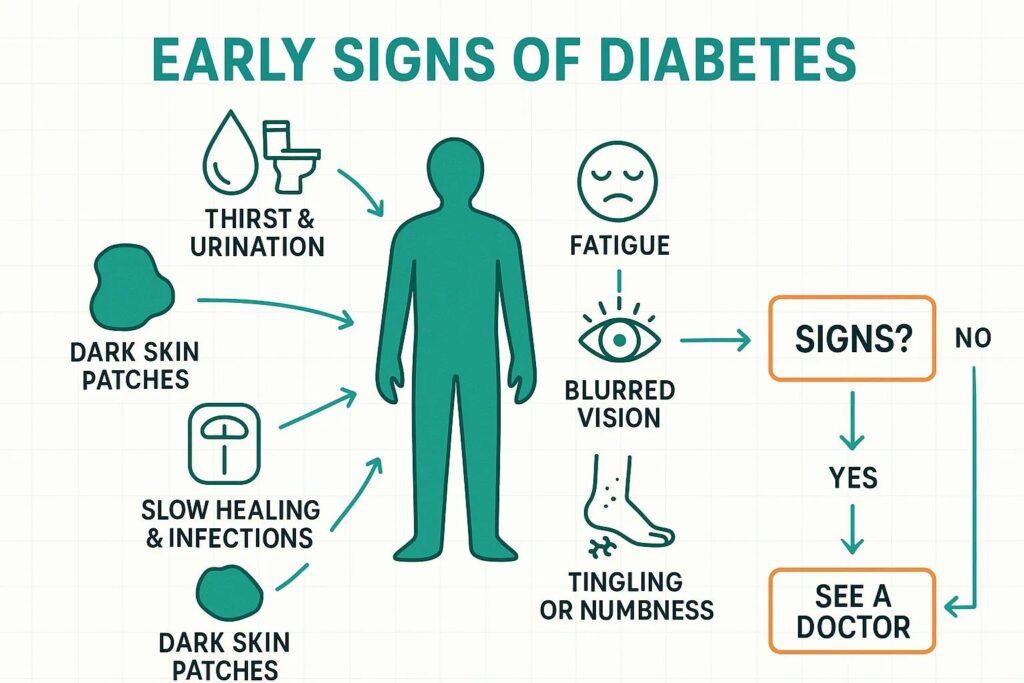
When to See a Specialist
If you recognize any of these symptoms—or you have risk factors like obesity, a family history of diabetes, or a sedentary lifestyle—it’s important to get evaluated by a healthcare professional.
At VOMD, our team, led by Dr. Michael Li, a board-certified physician in Internal Medicine and Obesity Medicine, takes a comprehensive approach. We assess your full metabolic health through labs, lifestyle review, and body composition analysis. From there, we build a personalized care plan that focuses on prevention, treatment, and long-term wellness.
The goal isn’t just to manage numbers—it’s to help you feel better, think clearer, move easier, and live longer.
The Power of Early Detection
The earlier diabetes or prediabetes is identified, the more options you have to reverse or control it. Through proper medical care, lifestyle adjustments, and sometimes medication, blood sugar can often be brought back into a healthy range—before lasting damage occurs.
Even small improvements—better sleep, modest weight loss, increased movement, or mindful eating—can make a meaningful impact on blood sugar and overall health.
Take the First Step Today
If any of these signs sound familiar, don’t wait to get checked. Knowing your numbers can empower you to take action early and prevent complications down the road.
At Valley Obesity Medicine & Diabetes, we specialize in helping patients understand and manage metabolic health with evidence-based, compassionate care. Whether you’re managing diabetes or looking to prevent it, we’ll partner with you every step of the way.
Schedule your consultation today and take the first step toward clarity, confidence, and better health.