
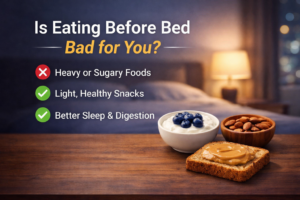
Is Eating Before Bed Bad for You?
Many of us have had that late-night snack habit—sometimes it’s a small piece of chocolate, other times a full bowl of cereal before hitting the pillow. But is eating before bed actually harmful? Let’s break it down.
1. How your body processes food at night
Your metabolism naturally slows down while you sleep, which can affect how your body uses the food you eat. Eating a large, heavy meal right before bed may:
- Make it harder for your body to digest, leading to discomfort or indigestion
- Increase the likelihood of acid reflux, especially if you lie down immediately after eating
- Potentially contribute to weight gain if it consistently adds extra calories
2. Timing and portion matter
Not all late-night eating is created equal. A small, balanced snack may actually help:
- Stabilize blood sugar levels overnight, particularly for people with diabetes or insulin sensitivity
- Prevent waking up hungry, which can disrupt sleep
Examples of smart nighttime snacks:
- Greek yogurt with berries
- A small handful of nuts
- A slice of whole-grain toast with nut butter
3. Quality matters more than timing
It’s not just about when you eat—it’s about what you eat. Sugary, fried, or highly processed foods can spike blood sugar, disrupt sleep, and contribute to weight gain. Choosing protein, fiber, and healthy fats supports both sleep and overall health.
4. Listen to your body
Your body gives you clues about what works. If you notice indigestion, poor sleep, or morning fatigue after late-night meals, consider adjusting the timing, portion size, or content of your evening food.
Bottom line: Eating before bed isn’t inherently “bad,” but what, how much, and when you eat makes a difference. Small, balanced snacks can be helpful, while large, heavy, or sugary meals may disrupt sleep and digestion.
At Valley Obesity Medicine & Diabetes, we help patients find strategies that fit their lifestyle, support healthy sleep, and promote long-term wellness. If late-night snacking is a struggle for you, we can help you make it work in a way that supports your health goals.
Michael Li, MD