If you’ve ever tried to lose weight, you know how confusing it can be. One day it’s all about low-carb. The next, it’s fasting or counting points. Then there are medications, supplements, and endless programs promising fast results.
But not all weight loss approaches are created equal—and not all are right for everyone.
At Valley Obesity Medicine & Diabetes (VOMD), we help patients make sense of their options with science, compassion, and a focus on lasting results. Understanding the difference between medical, commercial, and lifestyle-based approaches is the first step in choosing the one that fits your body, your goals, and your life.
The Reality of Weight Management
Before diving into the approaches, it’s important to acknowledge one key truth: obesity is not just about willpower.
Weight is regulated by a complex interaction of genetics, hormones, metabolism, environment, and behavior. That’s why most “one-size-fits-all” programs don’t work long-term—they focus only on calories or motivation, not the underlying biology.
Real, lasting progress requires a plan that addresses both the science of metabolism and the human side of change.
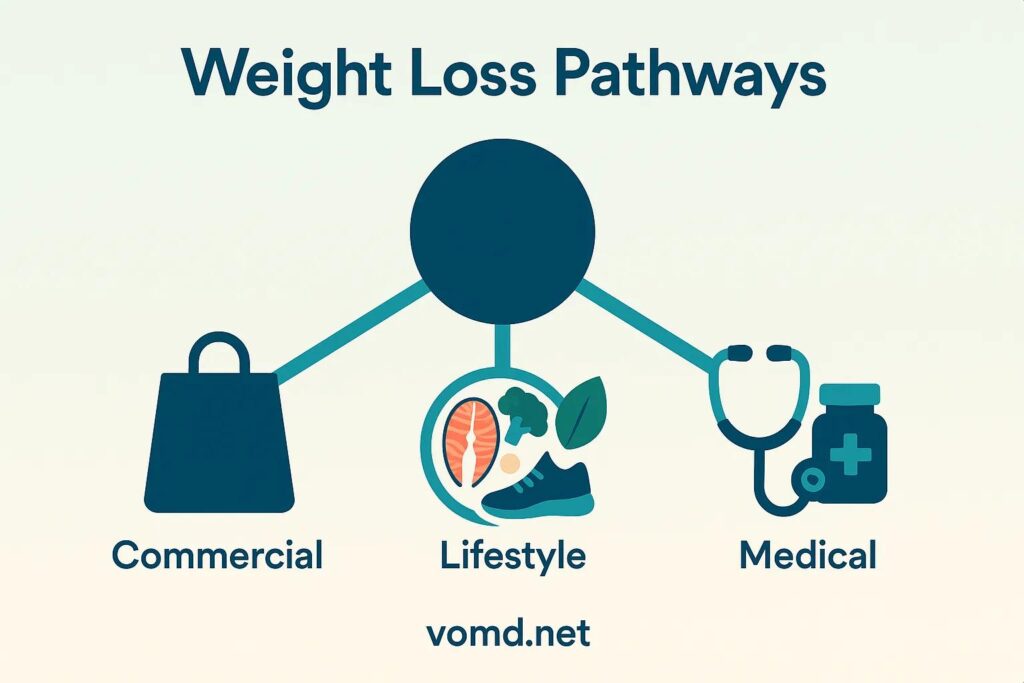
1. Commercial Weight Loss Programs
Examples: Weight Watchers, Jenny Craig, Noom, Nutrisystem
Commercial programs are often the most familiar. They typically provide structured meal plans, calorie tracking, group support, and sometimes prepackaged meals. These plans can be appealing because they’re convenient and often come with a community element that keeps participants accountable.
Pros:
- Clear structure and easy-to-follow guidelines
- Community or group support can boost motivation
- Helpful starting point for learning portion control and nutrition basics
Cons:
- May not address the why behind weight gain (like hormones, insulin resistance, or medications)
- Results often plateau or fade after the program ends
- Some can be expensive or rely on products you have to keep purchasing
Who it’s best for: People who want structure and accountability, but who don’t have complex medical conditions contributing to weight gain.
While these programs can be a good first step, many patients come to VOMD after trying them without long-term success—because true weight management often requires a deeper, more individualized approach.
2. Lifestyle-Based Approaches
Examples: Diet and exercise plans guided by personal preference or coaching, such as Mediterranean, low-carb, or plant-based eating, combined with physical activity and stress management.
Lifestyle-based approaches focus on sustainable changes in diet, movement, sleep, and stress. These strategies aim to improve overall health and weight gradually, emphasizing balance and long-term habits rather than restriction.
Pros:
- Flexible and adaptable to personal preferences
- Focuses on long-term health, not just short-term weight loss
- Encourages sustainable habits for lifelong wellness
Cons:
- May be challenging without professional guidance or accountability
- Progress can be slow without addressing metabolic or hormonal factors
- Harder to stay consistent without a structured plan or measurable feedback
Who it’s best for: Those with mild weight gain, few metabolic issues, or those looking to maintain results after a more structured plan.
At VOMD, lifestyle coaching is an essential part of every treatment plan—but it’s supported by medical insight, not willpower alone.
3. Medical Weight Loss Programs
This is where our work at Valley Obesity Medicine & Diabetes comes in.
Medical weight loss is a physician-supervised approach that looks beyond surface-level diet and exercise to understand how your body functions on a metabolic level.
It’s not about fad diets or temporary fixes—it’s about personalized, evidence-based care that helps your body work with you, not against you.
A medical weight loss plan at VOMD may include:
- A comprehensive review of your medical history, labs, and body composition
- Evaluation for hormonal or metabolic conditions such as insulin resistance, thyroid imbalance, or sleep apnea
- Personalized nutrition and activity recommendations
- If appropriate, FDA-approved medications for appetite regulation or insulin sensitivity
- Ongoing follow-up and behavioral support to ensure safe, steady progress
Pros:
- Tailored to your unique medical and metabolic profile
- Physician oversight ensures safety and accuracy
- Addresses underlying causes of weight gain (not just symptoms)
- Often covered by insurance, unlike most commercial programs
Cons:
- Requires commitment to regular visits and follow-up
- May involve prescription medications or lab monitoring
Who it’s best for: Anyone who has struggled with traditional weight loss methods, has obesity or related conditions like diabetes, PCOS, or high blood pressure, or wants a comprehensive, long-term solution.
At VOMD, Dr. Michael Li—board-certified in Internal Medicine and Obesity Medicine—leads every treatment plan with both clinical precision and human-centered care. We don’t just help you lose weight; we help you understand why your body responds the way it does and how to make changes that last.
How to Choose What’s Right for You
There’s no one “right” path for everyone. The best weight loss approach depends on your goals, health status, and how much support you need.
Ask yourself:
- Do I have other health conditions that affect my weight, like diabetes or thyroid issues?
- Have I tried commercial or lifestyle programs without lasting results?
- Do I want professional medical oversight and accountability?
If you answered “yes” to any of those questions, a medical weight loss approach may be the best fit.
If you’re just beginning your journey, combining medical insight with lifestyle strategies can give you the best of both worlds: clinical guidance and sustainable habits.
A More Compassionate Path Forward
At Valley Obesity Medicine & Diabetes, we know that weight management is about more than numbers on a scale—it’s about energy, confidence, and long-term health. Whether you’re trying to prevent diabetes, lower your blood pressure, or simply feel like yourself again, we’re here to help you get there safely and sustainably.
Your journey is unique—and your care should be too.
Schedule a consultation today to learn how a personalized, evidence-based approach can help you reach your goals and feel your best—without shame, judgment, or quick fixes.