New clinic focuses on treating obesity as a disease
By LISA PETERSON, Special to the Winchester Star –
WINCHESTER — When Dr. Michael Li greets his first patients at Valley Obesity Medicine & Diabetes (VOMD), he will bring more than a new practice to Winchester. He will introduce a new way of thinking about weight loss and long-term health — one that views obesity not as a matter of willpower, but as a disease that deserves careful, evidence-based treatment.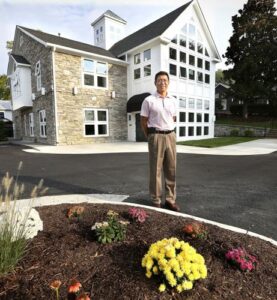
His motivation is deeply personal. Li watched his father-in-law struggle with obesity for years, cycling through diets that produced only temporary results. “The last five years of his life, he was around 300 pounds, and eventually he could hardly move,” he recalled. “He died in a nursing home. I just felt so bad. He definitely could have lived a lot longer.”
The clinic, located at 2055 Valley Ave. in Winchester, opens Sept. 29. A ribbon cutting is planned for Oct. 15. Those who attend will receive a free body composition report.
Li, who is board-certified in both internal medicine and obesity medicine, says his goal is to help patients break free from the cycle of temporary fixes and instead pursue sustainable health.
“Obesity is not simply about eating less or exercising more,” he explained. “It’s about understanding how the body, mind, and environment interact. Lasting weight loss almost always requires a system of support, not just one thing.”
More than 40% of American adults live with obesity, according to the National Center for Health Statistics, and rates have been rising for decades. Obesity is linked to diabetes, heart disease, and certain cancers, yet many patients struggle to find long-term solutions.
Li has seen that struggle up close. In his years of practice, he has met patients who tried fad diets, short-term programs, or medications without lasting results, often blaming themselves when nothing worked. That mindset has to change, he said.
“We don’t blame ourselves for developing hypertension,” he said. “Obesity is a disease. If you have a genetic predisposition or grew up in an obesogenic environment, it’s not all your fault. When patients understand the biological mechanisms behind obesity, they may be more willing to use all the available tools to manage it.”
Obesity medicine is still a relatively new specialty, expanding rapidly since the American Medical Association recognized obesity as a disease 12 years ago, Li said.
“When I did my residency twenty years ago, that knowledge either wasn’t present or wasn’t well publicized,” Li recalled. “As a resident in internal medicine, I really didn’t learn much about obesity. Now, we recognize there are biological mechanisms that determine the mass and distribution of tissue.”
After 15 years in hospital medicine, Li shifted his focus to outpatient care to better address chronic conditions, particularly obesity and diabetes.
At 6,500 square feet, his new clinic is designed to feel both welcoming and comfortable, with abundant natural light and cozy touches that make it feel more like a home than a typical medical office. It includes a conference room for patient consultations and even a fireplace. The upstairs space is reserved for future collaborations with health professionals such as physical therapists and dietitians.
“I’d like people to see our clinic as a destination, so it’s all under one roof,” Li said. “There’s no reason for people to drive elsewhere.”
Unlike many clinics that focus primarily on lab results or prescriptions, VOMD integrates continued support into patient care, which Li believes can be the difference between short-term progress and lasting change.
“One of the distinguishing features of this clinic is the emphasis on ongoing support,” he said. “For example, we provide post-visit phone calls, explain how to exercise, and what kind of food to eat. It’s about helping patients build confidence, manage setbacks, and celebrate progress.”
He describes the clinic’s philosophy as a partnership. “It’s not a doctor-patient relationship. If you don’t succeed, I fail. We’re truly in this together.”
He also stresses the importance of using new tools wisely, particularly GLP-1 medications, which have drawn national attention.
“Finally, we have a class of medication to treat obesity, but if we’re not careful, there could be problems,” Li warned. “What we intend to provide is comprehensive obesity care. When indicated, we can use pharmacological treatment, but a big part of our practice will be to provide ongoing support in other areas, such as physical activity, nutrition, and even psychological care.”
Li leads by example. At 58, he stays active and plays competitive soccer, a reflection of the healthy lifestyle he encourages in his patients.
As the clinic prepares to open, he envisions expanding its impact through patient education programs, group activities, and even social opportunities like hiking trips.
“I want to give patients hope, but support it with something concrete so it’s tangible,” he said. “We’ll lay out a plan and let them know upfront that this is not going to be a quick fix. If they work with me for a year, there will be positive changes.”
The clinic’s vision statement sums it up: “Our vision is to combat the epidemic of obesity and minimize its impact on society through science, compassion, and partnership.”
With its modern facility, focus on treating obesity as a disease, and commitment to ongoing support, VOMD is poised to set a new standard in the region. For patients who have struggled in their weight-loss journey, Li envisions the clinic as more than a treatment center; it’s a place that provides a clear, compassionate, and sustainable path toward lasting health.
“There’s absolutely no reason to give up,” he said. “Everyone has options, and together we can improve health, regain energy, and lower weight.”