 Are you seeking to understand the relationship between obesity and diabetes? If yes, you’re in the right place.
When it comes to your health, few conditions are as closely connected as obesity and type 2 diabetes. You might already know that extra weight can increase your risk of developing diabetes—but what’s often overlooked is how powerfully managing one can improve the other.
At Valley Obesity Medicine & Diabetes (VOMD), we see these two conditions as partners in the same story. Understanding how they intertwine helps us treat both more effectively—and helps you regain control of your health in a way that’s compassionate, realistic, and lasting.
The Link Between Obesity and Diabetes
Obesity and type 2 diabetes are both complex, chronic diseases. They’re not simply the result of “too much” or “too little” of anything—they’re influenced by genetics, hormones, environment, and daily habits.
When you carry excess weight, especially around the midsection, your body can become resistant to insulin—the hormone that moves sugar from your bloodstream into your cells for energy. As insulin resistance grows, your blood sugar levels rise. Over time, this can lead to prediabetes or type 2 diabetes.
But the relationship doesn’t stop there. Diabetes can make it harder to lose weight, too. Elevated insulin levels can increase hunger and promote fat storage, creating a frustrating cycle where both conditions feed each other.
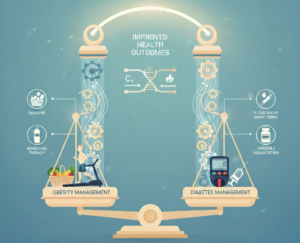
The good news? Because the two are linked, improvements in one often spark improvements in the other.
How Managing Obesity Helps Diabetes
Even a modest reduction in weight can have a powerful impact on blood sugar control. Studies show that losing as little as 5–10% of your body weight can significantly improve insulin sensitivity, reduce A1C levels, and lessen the need for certain diabetes medications.
Here’s how weight management supports diabetes care:
- Better Insulin Function: When fat cells shrink, your body’s cells respond more effectively to insulin. That means your blood sugar levels stabilize more easily.
- Lower Inflammation: Extra weight contributes to inflammation throughout the body. Reducing weight helps quiet that inflammation, which in turn helps the pancreas and other organs function more efficiently.
- Improved Energy and Mood: Weight loss often leads to more energy, better sleep, and improved mobility—factors that make it easier to stay consistent with healthy routines.
- Reduced Medication Dependence: As blood sugar improves, some patients find they can reduce or even discontinue certain medications under their provider’s supervision.
At VOMD, our medical weight management approach isn’t about restrictive diets or short-term fixes. It’s about addressing the root causes—hormonal imbalances, metabolic issues, lifestyle barriers—and building a plan that fits your life.
How Managing Diabetes Supports Weight Management
While it’s common to focus on weight first, managing diabetes effectively can also make weight loss more achievable. When blood sugar levels are stable, your body’s metabolism works more efficiently. You’re less likely to experience extreme hunger, fatigue, or energy crashes that derail healthy habits.
Key ways diabetes management supports weight loss include:
- Balancing Blood Sugar: Keeping blood sugar steady reduces cravings and helps control appetite.
- Protecting Metabolic Health: When your glucose levels are managed, your metabolism functions more predictably, making calorie balance easier to maintain.
- Encouraging Sustainable Habits: Diabetes management often involves structured meal timing, mindful food choices, and regular activity—all essential parts of long-term weight management.
- Reducing Frustration and Burnout: Seeing progress in blood sugar readings can boost motivation and confidence, creating positive momentum for lifestyle changes.
Our team works closely with patients to ensure diabetes care and weight care go hand in hand. It’s never about “choosing which one to treat first”—it’s about treating both in harmony.
Breaking the Cycle—With Compassion and Science
The connection between obesity and diabetes is strong, but it’s not a life sentence. Many patients come to us feeling stuck—having tried diets, exercise plans, and medications without lasting success. What we want every person to know is this: it’s not your fault.
Both obesity and diabetes are chronic diseases with complex biological drivers. They require medical care, not willpower alone. At Valley Obesity Medicine & Diabetes, we take a comprehensive, evidence-based approach that may include:
- Metabolic Testing: Understanding how your body processes food and energy.
- Medication Management: Using safe, effective tools to help regulate appetite, blood sugar, or both.
- Nutrition and Behavioral Coaching: Making realistic changes that fit your daily life.
- Long-Term Support: Helping you build sustainable habits and celebrating progress—no matter how small.
When you treat obesity and diabetes as interconnected conditions rather than separate battles, you create an opportunity for real, lasting change.
Small Steps, Big Impact
If you live with diabetes and are struggling with weight, or if you’re carrying extra weight and worried about diabetes, remember: you don’t have to tackle it alone.
Start with small, achievable goals. A few pounds lost, a few points dropped from your A1C, a few more walks per week—these add up faster than you think. With the right medical guidance, even modest progress can lead to measurable improvements in health, energy, and confidence.
Every step toward balance—physically, mentally, and emotionally—matters.
The Bottom Line
Obesity and diabetes share the same root systems, but they can also share the same solution: personalized, compassionate, science-driven care. Managing one strengthens the other. And managing both, with the right support, can restore not just your metabolic health—but your quality of life.
If you or a loved one is struggling with obesity and are interested in obesity care, or would like to sit down and chat with a experienced obesity professional, call 540-504-7194 or feel free to schedule a visit online.
At Valley Obesity Medicine & Diabetes, we’re here to help you take that first step—and every one that follows.
Because your journey isn’t just about numbers—it’s about you.